From Havana to the Palais de Chaillot: the origins of the Universal Declaration of Human Rights

This article is the first in a series on the shared history of Rotary and international organizations.

The year 1940 was a dark one for Europe. World War II was in full swing: many countries were plunged into uncertainty, occupied or threatened, and international communications were difficult. It was in this tense context that the 31st annual convention of Rotary International was held in Havana from June 6 to 10. Many European Rotarians were unable to attend due to hostilities and border closures.

At the heart of this extraordinary convention was the famous Resolution 40-15, "Rotary amid world conflict." Referring to the war already raging in a third of the countries where Rotary International was established, the Board of Directors recalled that the organization, founded on the ideal of service, "cannot survive where freedom, justice, truth, the value of the given word, and respect for human rights do not exist."

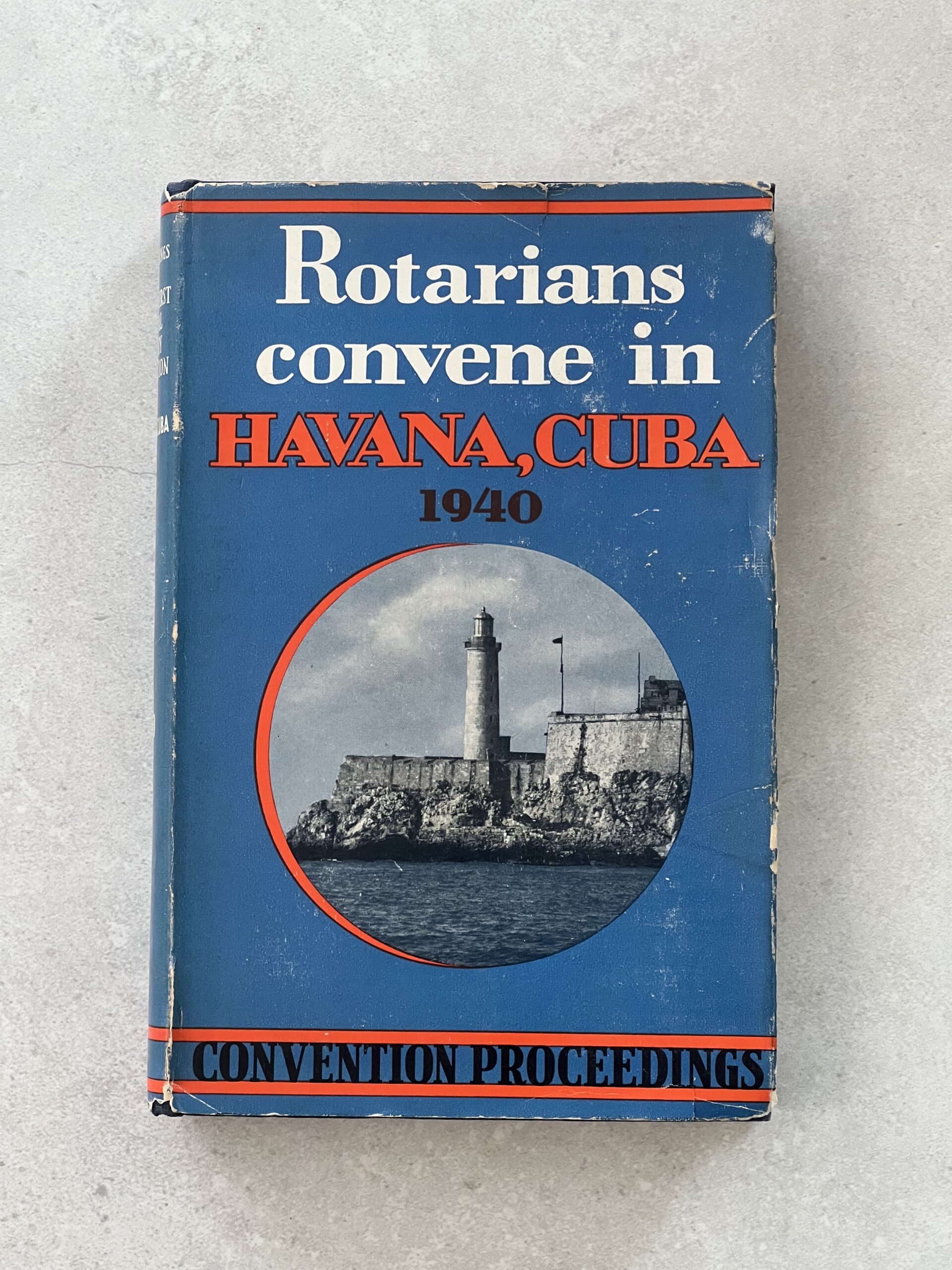
This excerpt is most often cited when researching the origins of the Universal Declaration of Human Rights. The full text of this resolution is published in the book "Proceedings of the Thirty-First Annual Rotary Convention."

Since 1910, these books, each around 400 pages long, have provided a comprehensive account of the major speeches, various addresses, and deliberations of the Council on Legislation. The last of these books was published on the occasion of the 2010 Convention.

It was in this book, from my personal collection, that I found the complete text. I have transcribed it in its entirety below, and also provide a translation into French.

Today, reports from international conventions are stored in Rotary's archives, posted on its website (here), and videos are published on social media.

For more than a score or years Rotary has encouraged and fostered the advancement of international understanding and good will among men as a basis for peace among nations. Yet during that period scarcely a year has passed without armed conflict in some part of the world. Today, warfare is being waged in many parts of the world, and of the large number of countries and geographical regions in which there are Rotary clubs, more than a third are engaged in armed hostilities. Because of these conditions the board of directors of Rotary International finds itself in the position of administering an organization embracing some clubs located in countries which are at war so far as some of the conflicts are concerned, yet neutral with regard to other conflicts, and embracing other clubs in countries which maintain varying degrees of neutrality with regard to all the conflicts.

It is outside the competence of the board of Rotary International to instruct Rotarians as to their duties as citizens of their respective countries. The board, however, points out that Rotary International, through convention action, has stated that it expects Rotarians, while cooperating toward a cordial international understanding to be thoroughly loyal to their religious and moral ideals and to the higher interests for their particular country.

In these catastrophic times, the board feels that it should re-emphasize to Rotarians throughout the world that Rotary is based on the ideal of service, and where freedom, justice, truth, sanctity of the pledged word, and respect for human rights do not exist, Rotary cannot live nor its ideal prevail. These principles, which are indispensable to Rotary, are vital to the maintenance of international peace and order and to human progress.

The board, therefore, condemns all attacks upon these principles and calls upon each Rotarian to exert his influence and exercise his strength to protect them and to help hasten the day when war need no longer be used as an instrument for settling international disputes.

To Rotarians and their families and to all others who are subject to the perils of war or who have suffered loss or bereavement, the board extends its deepest sympathy and expresses its sincere hope that the present period of trial and suffering may be brought to a speedy end.

Depuis plus de vingt ans, le Rotary encourage et favorise le développement de la compréhension internationale et de la bonne volonté entre les hommes comme base pour la paix entre les nations. Pourtant, durant cette période, rares sont les années qui se sont écoulées sans un conflit armé quelque part dans le monde. Aujourd’hui, des affrontements ont lieu dans de nombreuses régions du monde, et, parmi le grand nombre de pays et de zones géographiques dans lesquels sont des clubs Rotary, plus d’un tiers sont engagés dans des hostilités armées. De ce fait, le conseil d’administration du Rotary International se trouve dans la situation d’administrer une organisation comprenant des clubs situés dans des pays en guerre concernant certains conflits mais neutres vis-à-vis d’autres, et comprenant des clubs dans des pays qui maintiennent divers degrés de neutralité concernant l’ensemble de ces conflits.

Il ne relève pas de la compétence du conseil d’administration du Rotary International d’indiquer aux Rotariens leurs devoirs en tant que citoyens de leurs pays respectifs. Le conseil rappelle toutefois que le Rotary International, par une action entreprise en Convention, a déclaré qu’il attend des Rotariens qu’ils œuvrent à instaurer une entente internationale cordiale, tout en restant pleinement loyaux à leurs idéaux religieux et moraux, ainsi qu’aux intérêts supérieurs de leur propre pays.

En ces temps de catastrophe, le conseil considère qu’il doit rappeler aux Rotariens du monde entier que le Rotary repose sur l’idéal de service et que là où la liberté, la justice, la vérité, la valeur de la parole donnée et le respect des droits de l’homme n’existent pas, le Rotary ne peut vivre ni ses idéaux prévaloir. Ces principes, qui sont indispensables au Rotary, sont vitaux pour le maintien de la paix et de l’ordre dans le monde et pour le progrès de l’humanité.

Le conseil condamne donc toute atteinte à ces principes et en appelle à chaque Rotarien pour qu’il exerce son influence et emploie toute sa force pour les protéger, et pour qu’il contribue à faire venir le jour où on aura plus besoin de recourir à la guerre comme instrument de résolution des différends internationaux.

Aux Rotariens et à leurs familles, ainsi qu’à tous ceux qui sont confrontés aux périls de la guerre ou qui ont subi des pertes ou des deuils, le conseil adresse sa plus profonde sympathie et exprime son espoir sincère que cette période d’épreuves et de souffrances puisse s’achever rapidement.

Traduction : Pierre-Marie Achart, Rotary Paris Agora

This powerful text condemns any violation of universal principles and calls on every Rotarian to defend them tirelessly, in the hope of a world where war would cease to be a means of resolving disputes. Resolution 40-15 would go down in history and become an ethical foundation that paved the way for the future Universal Declaration of Human Rights (UDHR), adopted in 1948.

It is precisely in this context that René Cassin, French lawyer and Rotarian, professor of law and pacifist activist, member of the Académie des sciences morales et politiques (Academy of Moral and Political Sciences), comes to the fore. Born in 1887 in Bayonne, he is a veteran of the First World War.

He was a founding member of the Rotary Club of Lille in 1927, then a member of the Paris club from 1931 onwards. René Cassin embodied the Rotary spirit. Demonstrating great international openness, he campaigned from the 1920s onwards for closer ties between France and Germany. He was also deeply committed to the cause of veterans.

After World War II, he joined the United Nations Commission on Human Rights and became one of the main drafters of the UDHR, giving this founding text its structure, philosophical coherence, and universal scope.

In 1968, he was awarded the Nobel Peace Prize and the United Nations Human Rights Prize. He continued his work within other institutions such as the Constitutional Council and the Council of Europe, and served as President of the European Court of Human Rights.
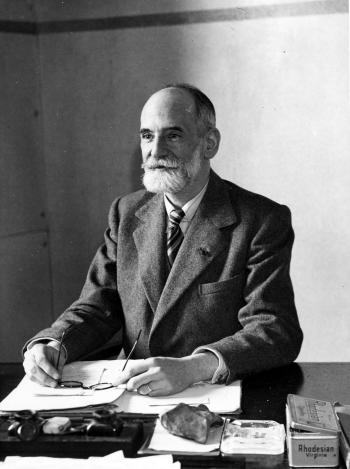
rene cassin
udhr signing

On December 10, 1948, the 48 member states of the United Nations present at the General Assembly signed the text at the Palais de Chaillot in Paris in a solemn atmosphere.

René Cassin was entrusted with the responsibility of presenting the document to the Assembly.

The link between Resolution 40-15 of Havana and the Universal Declaration of Human Rights is now well established. The wording and spirit of the Rotary text directly inspired the drafters of the UDHR.

The concept of "human rights," still rare at the time, spread among international lawyers and decision-makers thanks to the commitment of figures such as René Cassin. Thus, while Rotarians regretted the absences at the 1940 International Convention, they initiated, in adversity, the texts that would shape the postwar world. Resolution 40-15 remains an essential milestone: a declaration of principle, a cry against war, and a model whose influence extends to the Universal Declaration of Human Rights and beyond.

Article author: Pierre-Marie Achart Rotary Paris Agora (2025)
Original publication: link

Bibliography: Rotary.org, convention.rotary.org, Blog de Serge Gouteyron, Rotary Global History Fellowship, Académie des sciences morales et politiques, Rotary-Ribi.org, rotarygbi.org, Memorial-Rotary.de, UN.org, unfoundation.org, nobelprize.org, britannica.org, delegfrance.org, ordredelaliberation.fr